

By Ruvimbo Jane Matibiri
HARARE, Zimbabwe — Despite adopting a levy on sugary drinks this year, Zimbabwe still lacks child-focused rules on junk-food advertising or front-of-pack warnings, leaving the country behind regional efforts to curb childhood obesity, health advocates say.
Treasury introduced a sugar-sweetened beverage levy in the 2024 budget and later formalised it through Statutory Instrument 16 of 2024, revising the rate to approximately US$0.001 per gram of added sugar for most ready-to-drink beverages following industry pushback.
Health advocates welcomed the tax but say it stops short of measures that directly protect children from persuasive marketing and unclear labels.
“It’s a start, but without clear labels and limits on junk-food ads to kids, we’re only nibbling at the problem,” said Harare-based nutritionist Tatenda Chitura.
A UNICEF-supported review of Zimbabwe’s packaged food supply this year found inconsistent or missing nutrition information and urged mandatory front-of-pack labels alongside restrictions on marketing unhealthy foods and drinks to children.
A separate 2024 UNICEF/WFP school-nutrition study reported that regulations to create a healthy food environment for school-age children are “not yet in place,” citing inconsistent labelling that makes it hard to monitor products or guide consumer choices.
“Food labelling is inconsistent in Zimbabwe, and packaged products do not carry the nutritional information required for adequate monitoring and evaluation of the packaged food supply, or to adequately inform consumers about their food choices,” read the study in part.
The Southern African Development Community’s 2024–2030 strategy urges member states to pair fiscal tools with strong labelling and child-directed marketing curbs—benchmarks advocates say Zimbabwe has not fully met despite adopting the levy.
A 2024 joint brief by the SADC Secretariat and UNICEF notes that health-related taxes are implemented in South Africa, Comoros, Zambia and Zimbabwe, generally below recommended levels, while interpretive front-of-pack labelling is only in draft form in South Africa and marketing controls on unhealthy foods exist in Botswana and South Africa.
“Health-related taxes are implemented in only four countries (South Africa, Comoros, Zambia and Zimbabwe), and in all of these at a lower than recommended level (below 20%),” read part of a 2024 Joint Advocacy Brief by the SADC Secretariat and UNICEF titled Preventing the Rising Tide of Childhood and Adolescent Overweight and Obesity in the Southern African Development Community.
“Interpretive front-of-pack nutrition labelling regulations are currently in draft form in South Africa only. Meanwhile, regulations to control the marketing of unhealthy foods and beverages are in place only in Botswana and South Africa.”
South Africa’s Health Promotion Levy, set at 2.1 cents per gram of sugar above 4 g/100 ml, has been linked in studies to reformulation and price changes that reduce sugar purchases—effects that typically depend on complementary marketing and labelling rules.
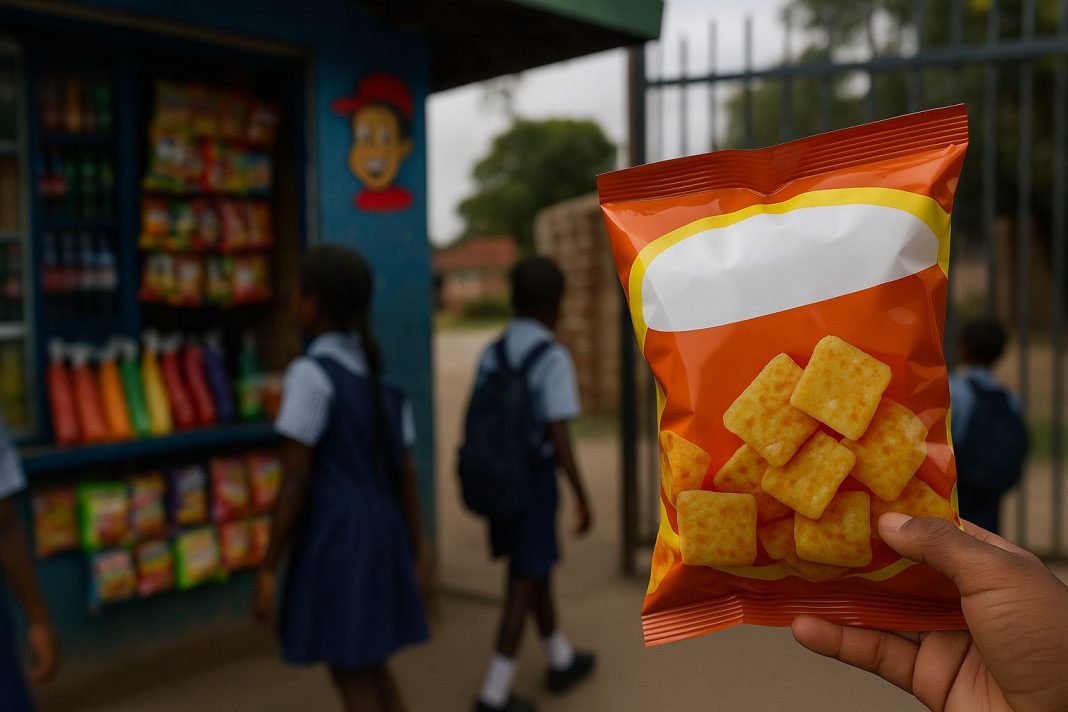
Parents and teachers in Harare and Chitungwiza said fizzy drinks and ultra-processed snacks still dominate school-gate sales. “Posters with cartoon characters sit right on the tuckshop. Children ask for those brands by name—tax or no tax,” said Tafadzwa Chikore, a father of two from Kuwadzana.
Added Lindiwe Dube, a parent of a Form 1 learner in Seke, Chitungwiza: “We pack fruit, but vendors push cheaper freezits and big fizzy drinks at the gate. Labels we can understand would help us say no.”
The Health Ministry did not provide a comment by publication time on timelines for front-of-pack labels or child-marketing restrictions.
Child-focused package—clear interpretive labels, limits on ads to children, and healthier school-food standards—would give the levy real power to shift habits.