
Decolonising childhood in Zimbabwe starts with a simple but urgent shift. We must stop measuring children against imported European ideals and start seeing them through their own lived realities, families, communities and cultures.
By Tendai Makaripe
Decolonising childhood in Zimbabwe must start with how we see, study and report on children’s lives.
Zimbabwe cannot protect children properly while using imported ideas of childhood that ignore local realities, family relationships and everyday struggles.
Too many adults in policy, academia and the media still act as if childhood has one correct shape.
That shape often comes from Europe.
It imagines the ideal child as sheltered, dependent, school-centred and free from serious household responsibility.
That model has value in its own context.
But it does not fit every child.
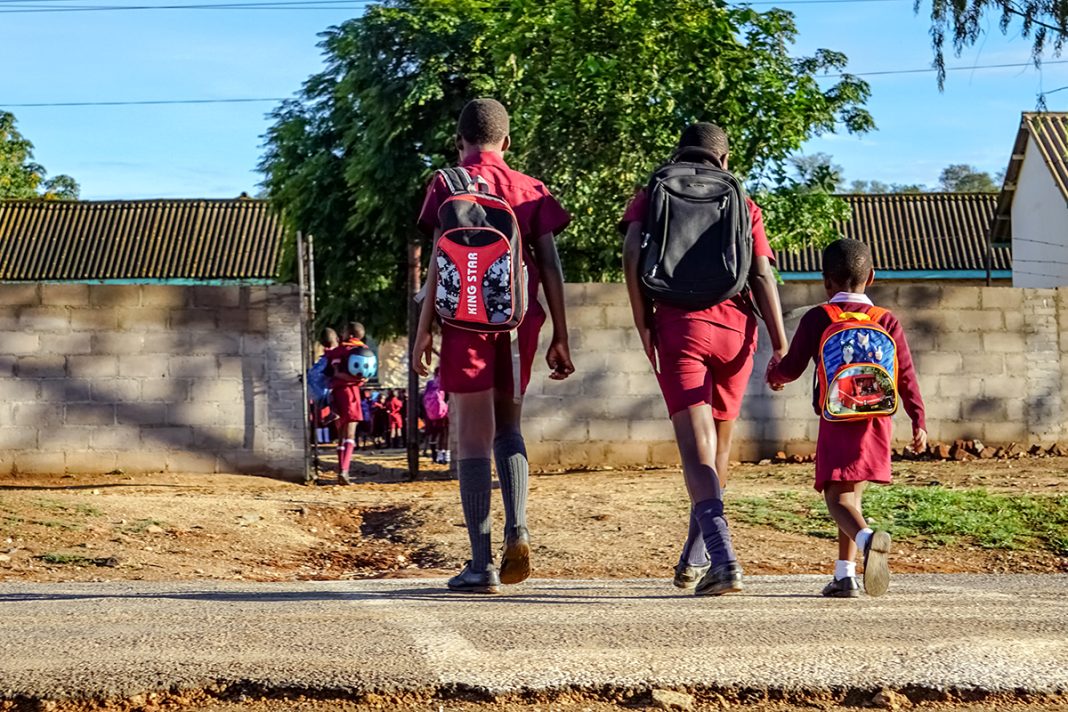
A child in rural Mutoko may wake before sunrise, fetch water, sweep the yard, prepare for school and still dream of becoming a lawyer.
A child in Mbare may help care for younger siblings, sell small goods after class and still top the class.
A child in Binga may grow through language, kinship, land and community in ways that do not look like European childhood, but still carry dignity, intelligence and meaning.
These children are not failed versions of Western children.
They are children living real childhoods in Zimbabwe.
Why one idea of childhood cannot fit all children
Scholars in childhood studies have started to challenge the idea that one model of childhood should guide the whole world.
Researchers Tatek Abebe, Anandini Dar and Ida Lysa argue that childhood studies have allowed Northern academia to define childhood for most of the world.
They call for southern theories and decolonial thinking that take the lives, histories and knowledge systems of children in Africa, Asia and Latin America.
That argument matters for Zimbabwe.
For years, many institutions have judged African children through standards they did not create.
A child who does chores can quickly get labelled oppressed.
A child who speaks through silence, humour or respect can get labelled voiceless.
A child shaped by duty and interdependence can get judged against an individualistic ideal that treats autonomy as the only sign of freedom.
Ashis Nandy warned that Western childhood can become a tool for the “reproduction of inferiority.”
In simple terms, he meant that once Europe treats its own model of childhood as normal, other children can start to look backward or incomplete, even when they simply live by different values and realities.
That danger still exists.
It appears in policy, schooling and the media.
How media shapes whose childhood counts
The media does not just report on children.
It helps define whose childhood counts as normal, modern and worthy.
When journalists cover African children only through crisis, pity or deviance, they repeat colonial habits of seeing.
They flatten children into victims, dropouts, child brides, street kids or child labourers without showing the deeper social world around them.
They miss relationships, intelligence, strategy and agency.
As a scholar interested in media, childhood studies and decoloniality, I believe this point matters deeply. Newsrooms often rank childhoods without saying so.
They present elite, urban, English-speaking childhoods as closer to the ideal.
They frame rural, poor or culturally different childhoods as problems waiting for correction.
That approach distorts reality.
A Zimbabwean child does not live outside history, class, culture or power.
The child lives inside all of them.
When we report children without those contexts, we fail them.
Decolonising childhood in Zimbabwe, therefore, also means decolonising how we tell children’s stories; listening before labelling and reporting children through their lived realities, families, languages and communities; asking better questions about poverty, care, labour, digital life, school access and social belonging.
Why decolonising childhood in Zimbabwe matters
The debate on decolonising childhood in Zimbabwe is not academic fashion.
It is a practical necessity.
When policymakers misunderstand children, they design weak interventions.
When scholars borrow theory without questioning it, they produce shallow knowledge.
When journalists copy foreign frames, they miss the truth in front of them.
Africa already offers rich ways of thinking about childhood.
Scholars such as Afua Twum-Danso Imoh and Bame Nsamenang show that many African childhoods grow through mutuality, personhood and interdependence.
Linda Tuhiwai Smith and Bagele Chilisa remind us that decolonising knowledge begins with changing how we ask questions, what we count as evidence and whose voices we trust.
Zimbabwe must take that seriously.
Europe can still offer lessons on child welfare and public investment.
But Europe must not remain the measuring stick for all children.
A child with responsibilities is not automatically unfree.
A child rooted in community is not less developed.
A child shaped by African realities does not need borrowed ideals to become fully human.
If we want stronger child protection, better journalism and deeper scholarship, we must begin here: decolonising childhood in Zimbabwe means understanding children through their real worlds.
That is where justice starts.
That is where better reporting starts.
That is where better childhood studies must start.