
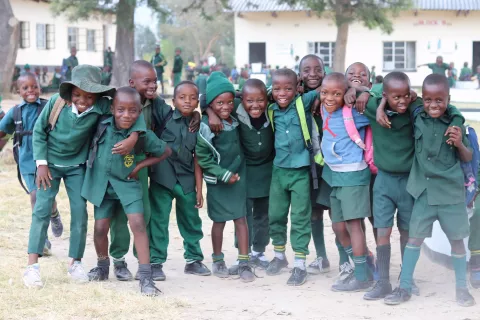

Cuts in global education aid may seem distant, but for Zimbabwe’s children, the impact could be immediate.
By Evans Zhou
HARARE — Zimbabwe stands at the crossroads of progress and peril as UNICEF warns that steep cuts in global education aid could push an estimated 6 million more children out of school by the end of 2026.
Nearly one-third of those affected live in emergency settings that depend on humanitarian assistance.
A UNICEF analysis released recently projects a US$3.2 billion, or 24 percent, fall in Official Development Assistance for education.
“Every dollar cut from education is not just a budget line—it’s a child’s future hanging in the balance,” said UNICEF Executive Director Catherine Russell.
“Education … often serves as a lifeline, connecting children to essential services like health, protection and nutrition.”
While the sharpest impacts are expected in West and Central Africa, Zimbabwe’s fragile education system could feel the ripple effects.
In 2025, the government allocated 35 percent of its national budget to social services, with 17 percent earmarked for education.
But UNICEF Zimbabwe reports that only 68 percent of those funds had been released by late 2024, with procurement delays and fiscal strain slowing delivery.
The country has also joined regional efforts to address the crisis.
In June, Zimbabwe launched the End Learning Poverty for All in Africa (ELPAf) campaign, becoming the third nation to commit to accelerated foundational learning.
“Accelerating foundational learning is not just an education reform. It is an economic imperative, a social justice issue, and a moral responsibility,” said Education Minister Torerayi Moyo.
Advocates caution that donor pullbacks could derail these efforts.
Zimbabwe lost 49,555 learners in 2024 alone, many due to poverty and early marriage.
At the same time, El Niño-driven droughts, cholera outbreaks and flash floods have damaged at least 92 schools since early 2025, threatening attendance and school feeding programs.
UNICEF is urging donor countries to safeguard education aid. Without both international support and stronger domestic investment, Zimbabwe risks losing hard-won gains — and with them, the futures of its children.