

By Evans Zhou
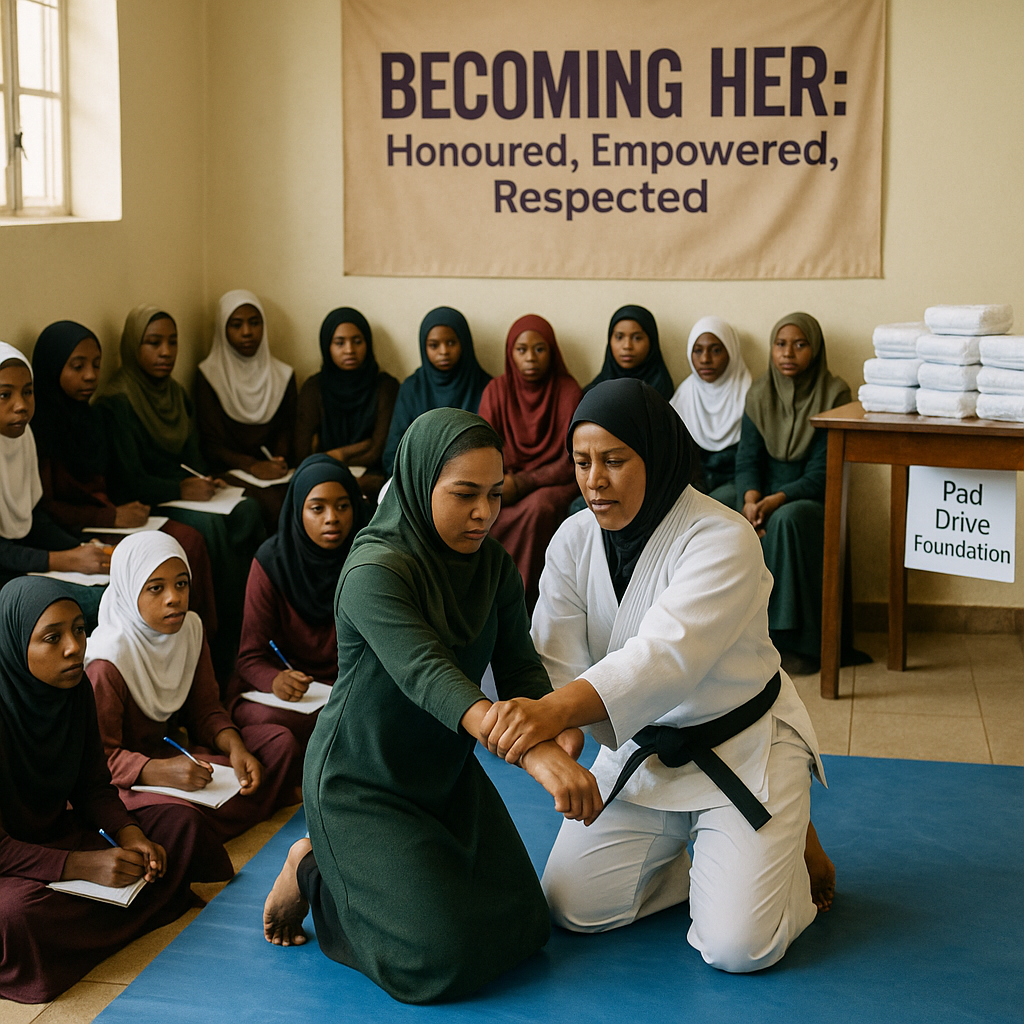
BULAWAYO, Zimbabwe — Dozens of Muslim girls, aged 10 to 16, from Bulawayo, Inyathi, Gwanda, and Zvishavane gathered at Barham Green Masjid for a two-day program that paired faith-based mentoring with practical life skills.
Dubbed “Becoming Her: Honoured, Empowered, Respected,” the program anchored workshops on confidence, safety and health, all rooted in Islamic values.
Organisers led group discussions and Islamic-themed learning games on identity, ethics and goal-setting.
“The girl child is the cornerstone of a healthy family and a thriving community,” one speaker said, urging parents and community leaders to ground girls in the morals and standards of Islam.
Nyasha Maparara, a community development coordinator in the Ministry of Women Affairs, Small and Medium Enterprise Development, said empowering girls is critical to national development.
“Embrace your identity and potential — your contributions are vital to Zimbabwe’s progress,” she said.
Beyond lectures, the program offered self-defence classes in jiu-jitsu and a menstrual health drive.
Muslim youth partnered with the Pad Drive Foundation to donate sanitary pads, underscoring how access to basic hygiene helps reduce absenteeism and keeps girls engaged in school.
Advocates say many pupils miss class during their periods because families cannot consistently afford supplies; simple donations and health education help keep girls in class and on track.
A recreational outing to Waterworld in Montrose capped the event and built camaraderie among participants. Community advocates say initiatives like this fill gaps for adolescent girls, especially where families and schools struggle to provide targeted support.
“The organisers framed it as a model other mosques and civic groups can adapt — combining religious instruction with safety training, mentorship and health education,” said Shariah Ali, one of the speakers.
The Bulawayo gathering comes amid wider efforts to advance girls’ rights and expand inclusive education in Zimbabwe.
Organisers and attendees hope to replicate the curriculum in more districts so girls return to their communities with practical skills, confidence and a clear sense of purpose.