
By Winston Chaniwa
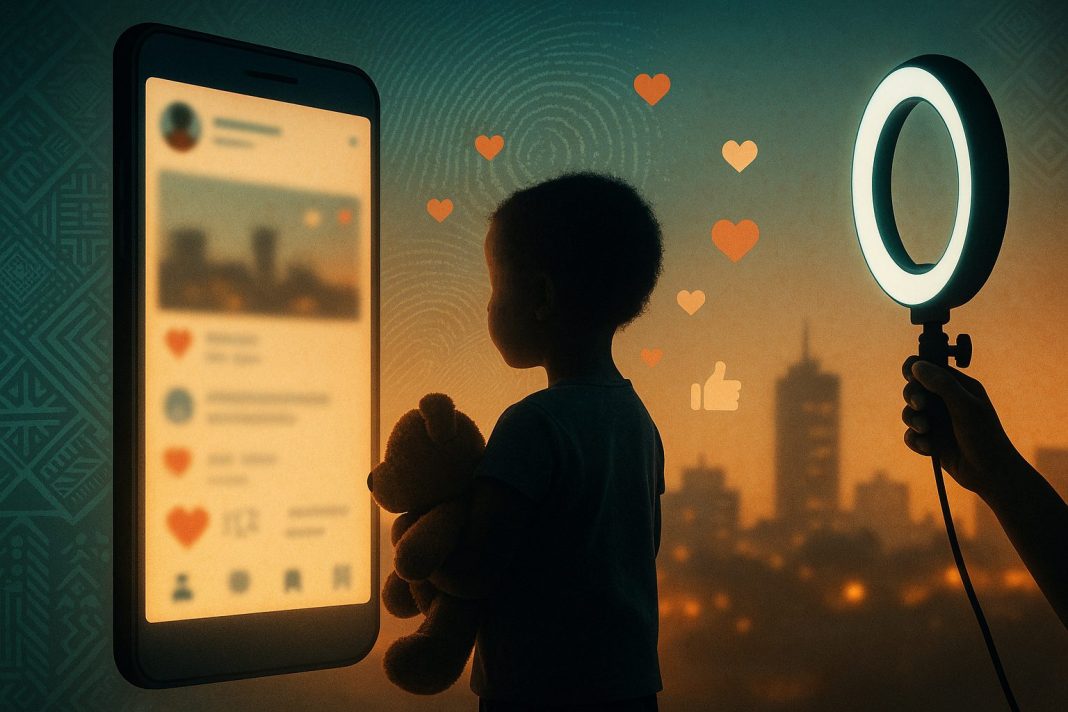
The viral video shows a child, no older than five, confidently modelling a new designer outfit.
The comments are a flood of hearts and fire emojis, and the post racks up thousands of likes. For the socialite parent who posted it, it’s another successful collab and a boost to their digital brand.
For a growing number of Zimbabweans, though, these “child influencers” blur the line between a parent’s hunger for relevance and a child’s right to a private, protected childhood.
This debate is unfolding as Zimbabwe’s digital landscape expands quickly. By early 2025, researchers estimated that “Facebook had 2.10 million users in Zimbabwe in early 2025,” while “Instagram had 544 thousand users in Zimbabwe in early 2025.”
Those numbers matter because Instagram and short-video platforms are the prime arenas for influencer content featuring children.
Child protection groups warn that this growth lives alongside real dangers. Globally, a landmark estimate found that “300 million+ children under the age of 18 have been affected by online child sexual exploitation and abuse in the last 12 months.”
Even if measurement is difficult, the scale of harm is undeniable.
In the United States, the U.S. Surgeon General has cautioned that “there are ample indicators that social media can also have a profound risk of harm to the mental health and well-being of children and adolescents,” a warning that resonates far beyond America’s borders.
The American Psychological Association adds a sober nuance: “Using social media is not inherently beneficial or harmful to young people,” but risks increase without strong guardrails, mentoring and age-appropriate use.
It is within this risky environment that children as young as five are being turned into “social media celebrities.”
Experts are sounding the alarm on how this affects identity and mental health. Simbarashe Namusi, a scholar and media analyst, explains that growing up in the public eye can shape a child’s sense of self in damaging ways.
“They may struggle with constant scrutiny, pressure to maintain a perfect public image, and an unhealthy need for online validation. This can lead to anxiety, low self-esteem, and depression,” said Namusi.
He also stresses a crucial point: children cannot give informed consent to lifelong digital exposure, which can render parental posting a form of exploitation.
From a legal standpoint, Zimbabwe already offers a clear compass—even if it hasn’t yet fully mapped the digital terrain.
Section 81 of the Constitution states plainly: “A child’s best interests are paramount in every matter concerning the child.”
That principle applies whether the child’s image is on a billboard, a TV set, or a parent’s TikTok.
Child rights lawyer Zororo Nkomo is careful to note that not all paid content featuring a child is exploitative.
The crucial factor, he says, is the parents’ motivation.
“If the primary driver of that content is for financial gain to the parent rather than for the benefit of the child, such content violates children’s rights,” he said.
In other words, parents can’t hide behind the idea of blanket consent; under Zimbabwean law, consent must be exercised in a child’s best interests.
Global standards echo this emphasis.
The UN Committee on the Rights of the Child, in its guidance on the digital world, insists that “States parties should ensure that … the best interests of every child are a primary consideration” in how the digital environment is designed, managed and used.
The message is simple and firm: children’s rights travel with them online.
Celebrities and artists who straddle both public life and parenting are urging restraint. Musician Tariro neGitare acknowledges that social media can connect families with audiences, but warns against overexposure.
“It’s important to protect a child’s privacy and dignity. Sharing moments that are meaningful or celebratory can be wonderful, but exposing children to constant scrutiny or sharing personal struggles can be damaging,” she said.
Every day, users feel it, too.
Sangiwe Mpofu, who follows socialites online, worries that even when parents think they are giving children a financial head start, they may be robbing them of a normal upbringing—and teaching them to chase “likes” as a measure of worth.
There are cautionary tales abroad that show how quickly things can turn from glossy to grim.
In the United States, YouTuber Ruby Franke—who built an audience by documenting family life—“pleaded guilty to four counts of aggravated child abuse,” and was later sentenced to multiple prison terms after authorities found two of her children malnourished and injured. What began as family content ended as a criminal case and a shattered home.
Not every controversy is criminal, but even less extreme cases can spark serious safety concerns.
The toddler account “Wren Eleanor,” with tens of millions of followers on TikTok, prompted a wave of parents to scrub their feeds after widespread reports of “inappropriate comments” and mass saving of the child’s videos; as one news report put it, the account “has sparked a discussion about children’s privacy and safety online.”
Policy is starting to catch up. France now treats commercial child influence as child labour in some situations.
As the Council of Europe’s audiovisual law observatory summarises, “Before their children are filmed or their videos are disseminated, parents must request an individual licence or approval from the authorities.”
The point is to establish legal duties and clear limits on parents’ monetisation of children’s images.
In the United States, Illinois became the first state to require payment and record-keeping for “kidfluencer” earnings; children can even sue later if adults kept the money.
Research shows that children under 16 featured in monetised content must “be entitled to a percentage of earnings if they appear in at least 30% of the content.”
Minnesota followed with a law “providing compensation for minors appearing in Internet content creation,” and additional states have moved to similar rules.
Zimbabwe’s legal framework offers anchors that can guide local practice while lawmakers consider more specific rules for the digital age.
Section 81 doesn’t mention “digital footprints,” but its logic is unmistakable: a child’s best interests come first, above clicks or contracts.
That principle aligns with international guidance and with what mental-health research is increasingly finding about the pressures of public childhoods.
And it undergirds Nkomo’s caution that parental consent is never absolute; it must be exercised for the child’s good.
The ethical dilemma, then, isn’t whether parents love their children. It’s whether they love them enough to shield them.
Namusi argues that platforms must share responsibility: “They should implement stricter guidelines and regulations for content featuring children and provide tools for parents to control and monitor their children’s online presence. They also need to ensure transparency and accountability in their content moderation policies,” he said.
That demand mirrors the UN child-rights guidance for the digital space and would give Zimbabwean families a stronger safety net.
Tariro calls it a “double-edged sword.” Used sparingly, social media can celebrate childhood and community. Used constantly, it can turn children into commodities.
Mpofu fears that kids will internalise the crowd’s gaze—learning to edit themselves for strangers, to seek validation they never consented to need. That is a poor apprenticeship for adulthood.
What would a Zimbabwean path look like in practice? It begins with a cultural reset: parents asking not “Will this perform?” but “Will this protect?”
It continues with platform tools and clear labelling that de-incentivise monetising minors, better age-verification and reporting pathways, and creator norms that keep children largely off-camera or anonymised.
It could, in time, include laws modelled on France’s licensing and Illinois’s compensation rules to ensure that when children do appear, it’s rare, necessary, and firmly in their best interest—with income reserved for them and a right, when they are older, to demand deletion.
None of that will end the allure of the spotlight.
But it will make it far harder to profit from children while pretending it’s the same as posting a birthday photo.
As Zimbabwe’s online audience grows, the debate over “child socialites” will intensify.
The Constitution already tells us where to stand: children first, every time. Or, as the drafters put it—words that belong above every smartphone camera—“A child’s best interests are paramount in every matter concerning the child.”