
By Evans Zhou
Charity Organisation, Noble Hands Zimbabwe, launched a skin cancer screening drive on Saturday at Mpilo Central Hospital in Bulawayo, aiming to promote early detection, treatment, and prevention for individuals with albinism and vitiligo.
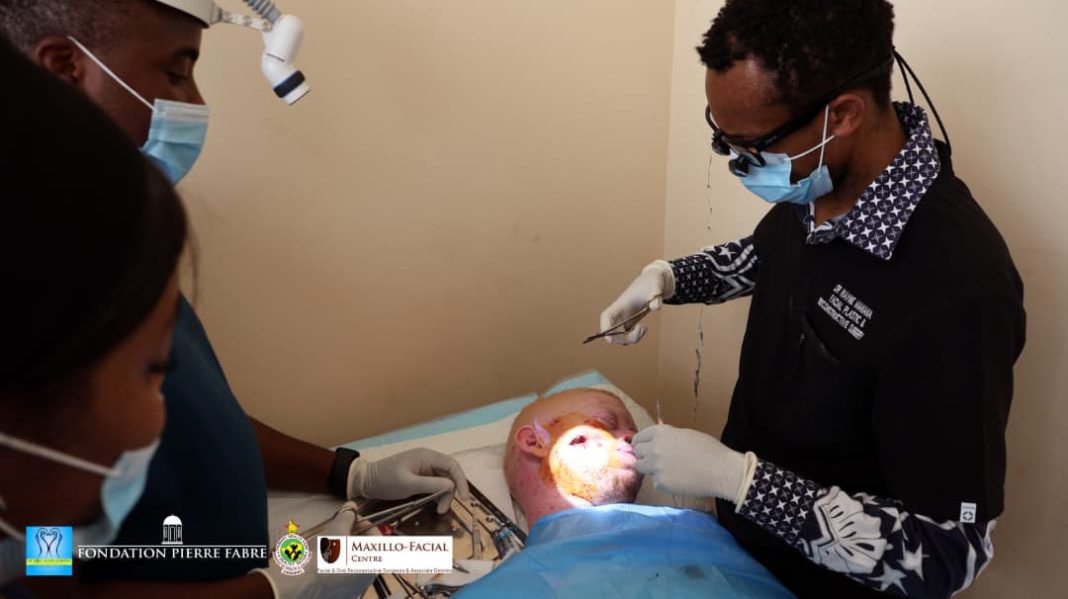
The organisation partnered with the Ministry of Health and Child Care and Mpilo Central Hospital to provide medical consultations, dermatological examinations and free surgical procedures, organisers said.
Medical teams carried out cryotherapy, biopsies and health education sessions, while beneficiaries received sun protection kits that included sunscreen, lip balm and hats.
Dozens of beneficiaries travelled from Bulawayo, Binga, Tsholotsho and surrounding areas to attend the screening, organisers said.
Maritha Moyo, an albinism community advocate, said discrimination and stigma isolate children with albinism and discourage them from mixing with other children.
“Children with albinism face discrimination challenges, whether at home or in public spaces, and this mostly demotivates young people from associating with others,” Moyo said.
Moyo urged parents to start acceptance at home and teach children with albinism that they belong.
“Parents have a duty to mould the mindset of their children.
Educate them, tell them the truth that they are the same as other children.
Give them the spirit that we were all created by God, it is just a skin condition, not a difference,” she said.
Moyo said poverty deepens challenges for many families raising children with albinism and affects access to care and protective products.
“Most families with children with albinism are not financially stable, and that brings many challenges. Parents need to educate their children that they are all the same and allow them to play with others without fear of harm,” she said.
Moyo said families should avoid isolating children through overprotection and should help them build resilience in everyday settings.
“Let the child interact with others and face realities outside the home. If they experience bullying, teach them how to defend themselves so they can realise that they are just like everyone else,” she said.
Moyo warned that relying only on exclusive “safe spaces” can deepen segregation.
“If a child only spends time in safe spaces with other people with albinism, they will not learn how to interact with those without albinism, which can lead to further exclusion,” she said.
She called on the government to strengthen inclusive education, saying children with albinism need supportive learning environments rather than separate schools.
“Every school should be special. While special schools exist for certain disabilities, all schools must include children with albinism. That is how communities learn to live with disability,” Moyo said.
Angela Nokuthaba Dube, a social worker from Noble Hands Zimbabwe in Cowdray Park, Bulawayo, said the screening aimed to identify early signs of skin cancer and connect patients to treatment, especially those who cannot afford care.
“The main goal is to detect any signs of skin cancer and ensure people receive the treatment they need, especially those who have already developed the condition but cannot afford the high cost of treatment,” Dube said.
Dube said people with albinism face heightened risks because of sun sensitivity and other complications, including vision problems.
“Although healthcare is for everyone, people with albinism face unique challenges such as sun sensitivity, light sensitivity and short-sightedness,” she said.
Dube said Noble Hands Zimbabwe plans to take the screenings to rural communities and is seeking support for a mobile clinic.
“Our goal is to have a mobile clinic that travels with volunteer doctors to reach remote areas, especially children and elderly people with albinism,” she said.
Dube said the organisation also supports learners with albinism and runs awareness programmes to challenge misconceptions.
“We provide educational assistance, print large-print textbooks for learners with albinism, and run music projects to raise awareness and demystify misconceptions surrounding albinism,” Dube said.
The screening at Mpilo Central Hospital formed part of ongoing efforts by health authorities and civil society groups to expand specialised care and improve access to prevention tools for people with albinism in Zimbabwe.



✊