

By Tendai Makaripe
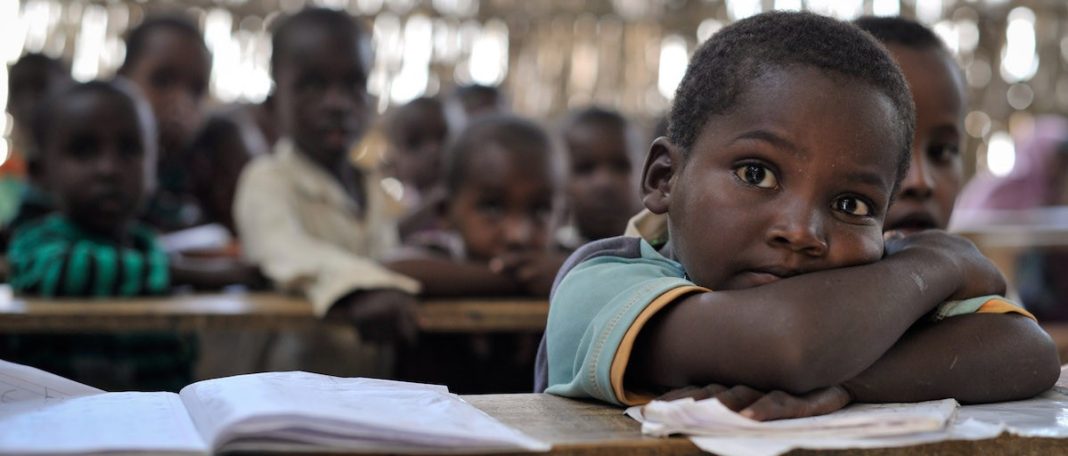
The United Nations Educational, Scientific and Cultural Organisation (UNESCO) says 273 million children out of school worldwide became the reality in 2024, marking the seventh straight annual rise and deepening the global education crisis.
UNESCO published the figures in its 2026 Global Education Monitoring Report, Access and equity, released on 25 March 2026, as the first instalment in the agency’s three-part Countdown to 2030 series on global education progress.
The report paints a troubling picture.
It says “one in six children of school age worldwide are excluded from education,” while only two in three students complete secondary school.
Those figures show that the crisis not only keeps children out of class.
It also pushes millions out before they finish school.
After years of progress, global momentum has slowed.
UNESCO says the world made major gains between 2000 and 2015, but that progress has weakened.
Exclusion has risen again across many regions.
Sub-Saharan Africa faces some of the heaviest pressure because rapid population growth is straining already stretched education systems.
The report suggests that no single factor drives the crisis.
Conflict has forced many children out of school and disrupted data collection in some of the world’s most fragile countries.
Poverty, weak public financing, rising household costs and unequal access to services have also kept many children away from class.
UNESCO argues that “No single solution will work,” and urges countries to tackle the real barriers children face in their communities.
That warning strongly resonates in Zimbabwe, where poverty, disability, geography and unequal opportunity still shape access to education.
Many children, especially in poor rural communities, struggle to stay in school because families cannot afford fees, transport and other school-related costs.
The global crisis UNESCO describes, therefore, mirrors pressures that many Zimbabwean families already know well.
Still, the report shows that progress is possible.
Since 2000, global enrolment in primary and secondary education has increased by 327 million, with 1.4 billion students in school in 2024.
But UNESCO says progress remains far too slow. At the current pace, the world will miss its 2030 education targets by decades.
For children, the consequences are serious. Missing school does not only mean missing lessons.
It also means losing opportunities, narrowing life chances and facing a future shaped more by exclusion than possibility