

By Tendai Makaripe
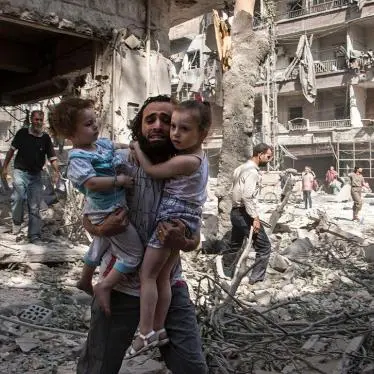
More than 340 children have been killed across the Middle East since the latest regional war began a month ago, UNICEF said Tuesday, as the widening conflict displaced more than 1.2 million children and deepened the humanitarian crisis.
UNICEF said the violence has spread beyond one battlefield, hitting the systems children depend on and exposing them to what Executive Director Catherine Russell called “horrific violence.”
Children under fire
The figures show that the conflict is no longer only about military targets and front lines.
It is also about children dying in schools, families losing access to hospitals and communities watching essential services collapse.
UNICEF said attacks across the region have damaged or destroyed hospitals, schools and water and sanitation systems.
The deadliest reported child casualty event of the latest escalation was a missile strike on the Shajareh Tayyebeh school in Iran that killed 168 children.
Over the same period, UNICEF said another 16 Palestinian children were killed, and more than 50 were injured in Gaza and the West Bank.
Childhood uprooted
The war is also being lived through repeated displacement.
UNICEF said bombardments and evacuation orders have emptied communities across several countries, forcing more than 1.2 million children from their homes.
In Lebanon alone, more than 370,000 children were displaced in just three weeks, with about 19,000 uprooted each day.
Reuters quoted UNICEF’s Marcoluigi Corsi describing the scale of the displacement as “staggering” and warning: “There is no safe place for people to go.”
As schools turned into shelters, learning was disrupted for more than 150,000 students, showing how war is damaging both children’s present safety and their prospects.
The damage that lasts
The crisis is also reshaping childhood in less visible ways.
UNICEF warned that prolonged exposure to violence and instability can harm children’s development, emotional well-being, and mental health.
In Lebanon, Corsi said, “The violence must stop.
Children must always be protected.”
That appeal reflects a wider reality: even where children survive, many are growing up amid trauma, interrupted schooling and the constant threat of further displacement.
Why it matters beyond the region
The impact is not stopping at the Middle East’s borders.
UNICEF said disruptions in procurement, production and transport could delay critical supplies to countries around the world by up to six months, while rising oil prices could push up the cost of vaccines, nutrition products and humanitarian deliveries.
The war, then, is not only killing and displacing children in the region.
It is also straining the global systems meant to keep vulnerable children alive elsewhere.