
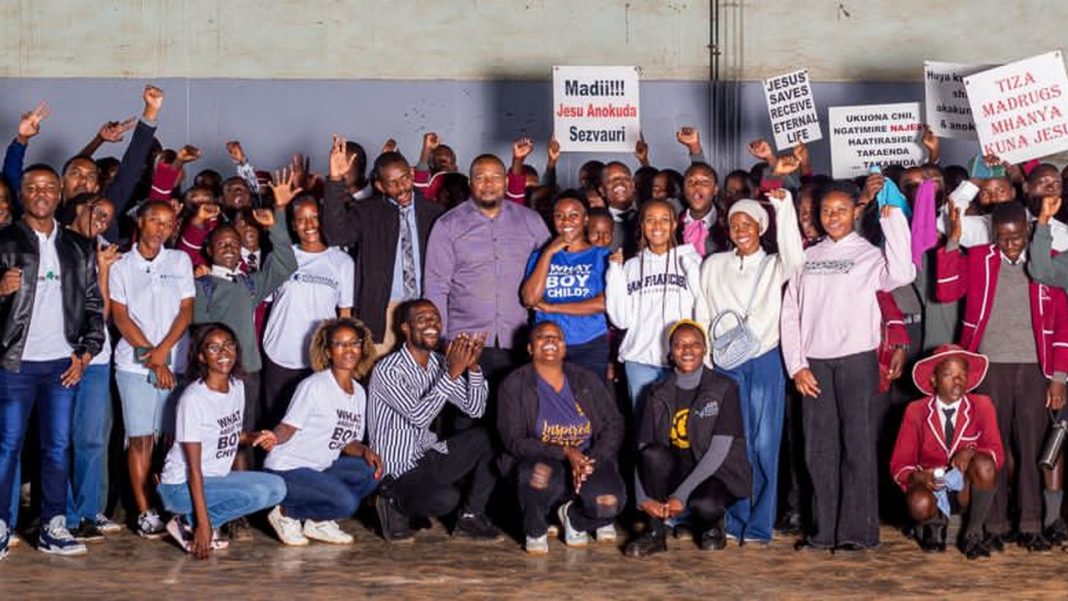

The push for gender equality was necessary and remains unfinished. But when society speaks loudly about empowering girls while staying quiet about the struggles of boys, it creates another imbalance, one that is now visible in homes, schools and communities.
By Nthokozo Gudu
In the global pursuit of gender equality, the empowerment of the girl child has rightly taken centre stage.
That work broke barriers, challenged discrimination and opened doors that had long remained shut.
It must continue. Yet a serious conversation about equality cannot stop there.
The boy child and the silence around his pain
The boy child is also facing a quiet crisis, and ignoring it will only deepen the problem.
Society often raises boys in contradiction.
It tells them to be strong, yet rarely teaches them what healthy strength looks like.
It expects them to lead, yet often leaves them without guidance. It warns them not to cry, complain or appear weak.
Over time, that silence can harden into confusion, anger, withdrawal or reckless behaviour.
When society denies boys the language for pain, that pain does not disappear. It often returns in destructive ways.
That is why the conversation about the boy child matters.
This is not a sentimental appeal. It is a social warning.
Drug and substance abuse as a symptom, not just a choice
Drug and substance abuse is one of the clearest signs of this crisis.
In Zimbabwe, UNICEF has already described it as one of the most serious public health and socio-pathological threats facing adolescents and young people.
Its 2023 research brief also found that substance abuse in the reviewed evidence was higher among boys than girls, with boys accounting for 59% and girls 41%.
Those figures matter because substance abuse is not only a story about poor choices.
It is also a story about vulnerability, peer pressure, emotional neglect, idleness, poor supervision and the search for belonging in the wrong places.
The emotional silence surrounding boys
The same pattern appears in mental and emotional well-being.
The World Health Organisation says more than 720,000 people die by suicide every year, and suicide was the third leading cause of death among 15- to 29-year-olds globally in 2021.
These numbers should push us to ask harder questions about how young people are coping with stress, shame, failure and loneliness. Boys deserve particular attention here because many still grow up under pressure to hide emotional pain instead of speaking about it.
When neglect becomes a social crisis
Education also reveals part of the problem.
UNESCO’s global report on boys’ disengagement from education found that in many countries, boys face a greater risk than girls of repeating grades, failing to complete levels of education and recording poorer learning outcomes.
That does not mean girls must lose attention.
It means a fair society must respond wherever disadvantage appears.
Support for boys should not compete with support for girls.
A balanced society must care about both.
Any discussion of the boy child can quickly be misunderstood.
To support boys is not to deny the real struggles that girls still face.
Girls continue to experience exclusion from education and economic opportunity in many settings, and they remain more vulnerable to child marriage, HIV and early pregnancy.
The point, then, is not to replace one concern with another.
The point is to reject selective empathy.
The mentorship gap
At the heart of this crisis lies a deeper problem. Drugs, school failure and violence are often symptoms. The real issue is the absence of intentional support.
Too many boys are growing up without sustained mentorship, emotionally available adults, positive models of manhood or safe spaces where they can speak honestly about fear, failure, identity and pressure. Without that support, many never learn how to process pain. Instead, they learn how to hide it.
What must change now?
The response must go beyond slogans.
A serious boy child agenda must begin at home, where families should teach boys that responsibility and emotional expression can coexist.
Schools must also play their part by treating mentorship, counselling and values-based guidance as essential, not optional.
Communities must reinforce that work through churches, sports clubs, youth groups and civic organisations that create spaces for belonging and accountability.
Men also have a crucial role to play.
Boys need men who model discipline, tenderness, self-control and honesty.
They need to see that strength does not mean silence and that masculinity does not require emotional distance.
The boy child does not need excuses. He needs formation.
He does not need indulgence. He needs direction. He must not grow up as the girl child’s rival.
He must grow up alongside her in a shared social vision that recognises the dignity, responsibility and emotional humanity of both.
Reclaiming the boy child
If we continue to neglect boys in the name of progress, society will eventually pay for that neglect through broken homes, addiction, violence, school failure and emotionally absent men.
But if we invest in boys deliberately, we improve our chances of raising fathers who are present, emotionally mature partners, leaders who are balanced and citizens who do not confuse silence with strength.
The task before us is not to reverse progress for girls.
It is to complete it.
A society that truly believes in balance, justice and human development cannot afford to leave the boy child behind.



I wrote a book Boy Child Dilemma
Good day Nelson. Kindly check your email