
By Tendai Makaripe
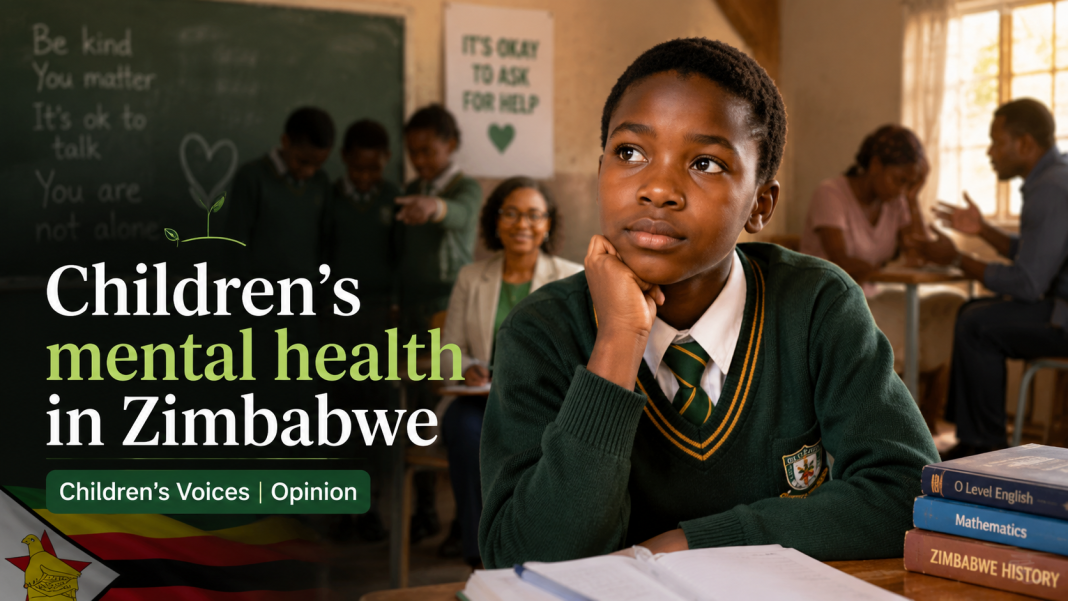
Children’s mental health in Zimbabwe remains one of the country’s most urgent but least discussed child protection concerns.
Many children attend school, wear clean uniforms and smile in public, yet carry emotional pain that adults rarely notice.
In many homes, a child can receive food, clothes and school fees but still suffer silently.
A boy may hear that crying shows weakness.
A girl may face blame before anyone asks what she survived.
A learner may receive punishment for poor marks when grief, fear, abuse, hunger, bullying or depression sits behind the failure.
Zimbabwe must talk about this issue because many children are not fine; they are only quiet.
Why children’s mental health in Zimbabwe can no longer be ignored
The country often talks about school fees, pass rates, child abuse, drug abuse, early pregnancy, bullying, family breakdown and online harm.
However, we rarely ask what these pressures do to the minds and hearts of children.
The World Health Organisation says one in seven children aged 10 to 19 lives with a mental disorder.
It also lists depression, anxiety and behavioural disorders among the leading causes of illness and disability among adolescents.
These global figures matter, but Zimbabwe must also look honestly at its own reality.
UNICEF Zimbabwe has raised concern that child and adolescent mental health challenges in the country remain underreported, poorly documented, stigmatised and rarely acknowledged.
That means many children may struggle without diagnosis, counselling, protection or even a safe adult who can listen.
More than two-thirds of children in Zimbabwe experience some form of violent discipline, while over a third of girls experience sexual violence before their 18th birthday, according to UNICEF Zimbabwe.
These figures speak beyond child protection. They also point to deep emotional wounds.
A child who faces violence, abuse, neglect, ridicule or constant fear does not simply “move on.” Pain can settle into anger, shame, poor concentration, self-hate, substance abuse, withdrawal or hopelessness.
Recent cases should make Zimbabwe listen
Recent public cases show why children’s mental health in Zimbabwe deserves urgent attention.
In January 2026, media reports said a 16-year-old learner from Bulawayo died by suicide shortly after the release of the November 2025 Ordinary Level results.
A month later, officials publicly raised concern over learner suicide cases linked to issues such as parental conflict, bullying, substance abuse and mental health challenges.
Zimbabwe should not treat such cases as isolated tragedies or social media talking points.
They should push parents, schools, churches, policymakers and communities to ask harder questions.
What support does a child receive after failing an exam? Where does a bullied learner report safely?
Who notices when a child becomes withdrawn, aggressive, hopeless or afraid?
How many children hide pain because they fear punishment, mockery or shame?
Schools must become safer listening spaces
The classroom often reveals a child’s pain first.
A learner who once participated may become quiet.
Another may sleep during lessons, fight classmates, skip school or stop submitting work. Too often, adults punish the behaviour without investigating the wound behind it.
This is why schools must take children’s mental health seriously.
Teachers need basic training to identify warning signs.
Schools need active counselling systems, clear referral pathways and safe reporting channels. A child in a rural school deserves the same emotional support as a child in an urban private school.
Exam pressure also needs attention.
Failure should never make a child feel that life has ended. Parents and schools must teach children that results matter, but they do not define a child’s worth.
Boys, girls and children with disabilities need care
Boys need special attention in this conversation.
Many grow up hearing that silence shows strength.
That message can make them lonely. Some boys later express pain through anger, violence, alcohol, drug use or withdrawal because no one taught them how to speak about fear, shame or sadness.
Girls also carry heavy burdens.
Sexual violence, early pregnancy, online abuse, household responsibilities and body shaming can damage self-worth. When society blames girls before protecting them, it deepens their pain.
Children with disabilities face another layer of struggle.
Some endure stigma, isolation, overprotection or exclusion from school and community life. They need dignity, friendship, access and emotional support, not pity.
Families, churches and communities must act
Zimbabwe must build solutions that fit its own social reality.
Many families first take pain to pastors, elders, aunties, uncles and grandparents before they reach a counsellor or clinic.
These trusted spaces can help children if they respond with compassion, confidentiality and wisdom.
Mental health conversations should not attack parents or shame schools.
Instead, they should help adults listen better.
A child who says, “I am not okay,” needs protection, not ridicule. A child who fails needs guidance, not humiliation. A child who reports bullying or abuse needs action, not silence.
Children’s mental health in Zimbabwe is a child protection, education, family and national development issue.
Zimbabwe must break the silence now.
Not because children are weak, but because they are precious.
Every child deserves a country where pain can be spoken, help can be found, and healing can begin.