

By Tendai Makaripe
By Wednesday, the Grade 7 pupil already feels tired as the Grade 7 exam pressure stretches the school day into early mornings, late afternoons, homework, and Saturday classes.
The child still wants six units.
The dream is Kutama High School.
But before the week ends, the routine has already taken away the energy, playtime, and Saturday rest that once made school life bearable.
“I really want to get 6 units because I want to go to Kutama High School,” said the pupil from Kambuzuma, whose name Children’s Voices withheld to protect the child from possible victimisation.
“The process is painful, though.
Sometimes I get so tired, especially around Wednesday and Thursday.
Saturdays used to be days for relaxing and playing, but not anymore.”
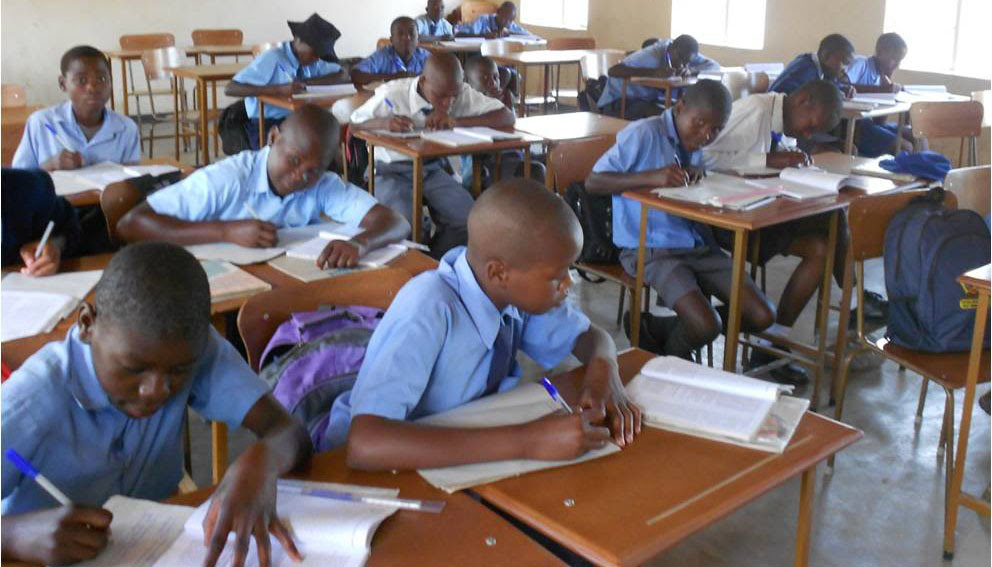
For some Grade 7 pupils in Harare, the pressure to pass the Grade 7 exam is stretching school into early mornings, late afternoons, extra lessons, homework and Saturday classes, raising concern among parents, teachers and child welfare experts that children are losing the rest, play and family time they need to stay healthy.
Parents interviewed by Children’s Voices said some pupils leave home around 6:30 a.m., attend ordinary lessons until about 3:30 p.m., remain behind for extra lessons until around 5 p.m. and return home around 5:30 p.m.
Many still carry homework from both normal lessons and extra lessons.
On Saturdays, some leave home around 8 a.m. and return around noon after more lessons.
Parents said the routine can stretch a child’s school-related week to nearly 60 hours before evening homework.
They said the pressure has become normal because Grade 7 results matter to families, schools and pupils who hope to enter competitive secondary schools.
But they also said children pay the price.
Macdonald Matuka, a parent from Milton Park, said many parents feel trapped between academic ambition and concern for their children’s health.
“As parents, we are caught in between,” Matuka said. “We want our children to pass, but at the same time, we are hurt seeing them leave home early and coming back late.”
Esther Muzondo, a parent from Eastview, said the workload has become too heavy for children who are still in primary school.
“The work is too much. The children are visibly drained,” Muzondo said.
“They have homework based on normal class work, then homework from the extra lessons. It is too much work. We did not have all this during our days in school.”
Another parent, Rabson Masaraure, said parents support hard work but worry that some teachers have taken extra lessons too far.
“We appreciate that children have to work, but I feel teachers are taking it too far,” Masaraure said.
“I pay $25 per month for extra lessons for my child. There are around 35 in her class. Just calculate how much the teacher is getting, assuming every child is attending.”
If all 35 pupils paid the same amount, one class would generate about $875 a month in extra lesson fees.
Children’s Voices could not independently verify whether all pupils in the class attend or pay the same amount.
The complaint touches on a sensitive national issue.
The government has repeatedly warned against paid private extra lessons.
The Ministry of Primary and Secondary Education has said teachers must not demand money from parents for work they already get paid to do in the classroom.
The ministry has also warned that teachers who demand payment for extra lessons risk disciplinary action.
Officials have encouraged parents to report illegal charges through school, district, provincial and head office channels.
At the same time, authorities have allowed supervised vacation school for examination classes under controlled conditions.
Schools must follow approved dates, controlled fees, receipting rules, supervision systems and safeguarding requirements.
That distinction matters.
Parents interviewed for this story did not reject extra academic support.
They questioned whether the support has become too long, too costly and too draining for children.
Psychologist Ivy Mukombachoto said long school days, extra lessons, homework and limited rest can affect children physically, emotionally and academically.
“Long school days, extra lessons, homework and limited rest can leave primary school children physically tired, emotionally stressed and less able to concentrate in class,” Mukombachoto said.
“Although extra lessons may help with exam preparation, too much work can reduce sleep, play, family time and the child’s general well-being. Over time, this pressure may cause burnout, anxiety, poor performance and a loss of interest in learning.”
Public health guidance supports those concerns.
The World Health Organisation says children and adolescents aged 5 to 17 should get at least 60 minutes of moderate to vigorous physical activity each day.
Sleep guidance used by the U.S. Centres for Disease Control and Prevention says children aged 6 to 12 need nine to 12 hours of sleep every 24 hours.
Long school days can squeeze both.
A child who leaves home before sunrise and returns around sunset may struggle to eat, bathe, complete homework, revise, help at home, talk to family, play and sleep early enough.
Mukombachoto said that pressure can affect concentration, mood, memory, motivation and physical health.
The social cost also matters.
Play helps children build friendships, manage emotions, solve problems and develop confidence.
Family time gives children space to talk about fears, pressure, school problems and personal goals.
When school takes over almost every waking hour, children lose the space they need to simply be children.
The issue also raises child rights questions.
Zimbabwe’s Constitution says every child has the right to education, health care, nutrition and shelter.
It also says a child’s best interests are paramount in every matter concerning the child.
That means schools, parents, and authorities should consider more than examination results when they make decisions about children’s learning schedules.
International and African child rights standards go further.
The United Nations Convention on the Rights of the Child recognises a child’s right to rest, leisure, play and cultural activities.
The African Charter on the Rights and Welfare of the Child also recognises the child’s right to rest, leisure, play and recreation.
Those rights do not mean children should avoid schoolwork.
They mean education systems should not treat rest and play as luxuries that children can lose whenever examinations approach.
A primary school teacher who requested anonymity said long school days, extra lessons and Saturday classes have become common because Grade 7 is an examination class and schools face pressure to produce good pass rates.
“As teachers, we have seen long school days, extra lessons and Saturday classes become common mainly because Grade 7 is an examination class, and schools are under pressure to produce good pass rates,” the teacher said.
“Parents also expect teachers to give pupils more time, while schools feel they must cover the syllabus, revise thoroughly and prepare learners for the demands of the final examinations.”
The teacher said schools often feel judged by examination performance. Parents also push teachers to provide more revision time.
That pressure does not come from teachers alone.
Many parents want their children to enter better secondary schools.
Some fear that a child who does not attend extra lessons will fall behind classmates who do.
Others feel forced to pay because refusing may leave their children isolated or disadvantaged.
The result is a cycle: schools chase results, parents demand extra support, teachers offer extra lessons, and children carry the burden.
Educationist Tapiwa Bakuri said schools must find a healthier balance.
“Schools must strike a balance,” Bakuri said.
“Children need proper revision, but they also need enough rest, play and family time because an exhausted child cannot learn effectively.
“Schools can prepare pupils better by using normal learning time more efficiently, giving focused revision instead of excessive work, reducing unnecessary homework and allowing children time to recover so that they remain healthy, motivated and ready to learn.”
The problem does not affect Zimbabwe alone.
Across Africa, private tutoring and extra lessons have grown around high-stakes examinations.
Education researchers often call this “shadow education” because it follows the formal school system and expands when families fear that ordinary classroom learning will not be enough.
Research on shadow education in Africa shows that paid tutoring has become common in several countries, especially where examination results determine access to better schools.
Researchers have also warned that paid tutoring can widen inequality when only some families can afford it.
South Africa has also debated homework, extra lessons and learner pressure in the wider context of school performance and inequality.
Some studies have questioned heavy homework loads and urged schools to make after-school learning more purposeful.
Kenya has taken a stricter legal approach.
The Basic Education Act prohibits holiday tuition and sets penalties for those who violate the law.
The Kenyan example shows that some countries treat excessive holiday teaching as both an education issue and a child welfare concern.
Zimbabwe has taken a mixed approach.
The government has condemned paid private extra lessons, but it has also allowed supervised vacation school for examination classes under controlled conditions.
That approach reflects the central challenge.
Children need academic support, but support should not become exploitation or exhaustion.
Parents in Eastview said schools should use normal learning hours better, communicate clearly with parents and reduce repeated homework.
They said teachers should identify pupils who need support instead of making extra lessons feel compulsory for everyone.
They also said schools should protect weekends, especially for primary school children.
For the Kambuzuma pupil, Saturday no longer feels like a break.
It has become another school day.
The child’s words show the heart of the problem.
Grade 7 pupils do not reject success. They want good results, better schools and proud parents.
But they also want rest, play and relief from a routine that follows them from early morning into the evening.
That is the balance Zimbabwe’s education system must confront.
A child can work hard and still need protection from overload.
A school can chase good results and still protect childhood.
A parent can want six units and still ask whether the road to those six units harms the child.
As Matuka said, parents want their children to pass, but they also want them to remain healthy.
“We want our children to pass,” he said. “But at the same time, we are hurt seeing them leave home early and coming back late.”