
By Lawrence Makamanzi
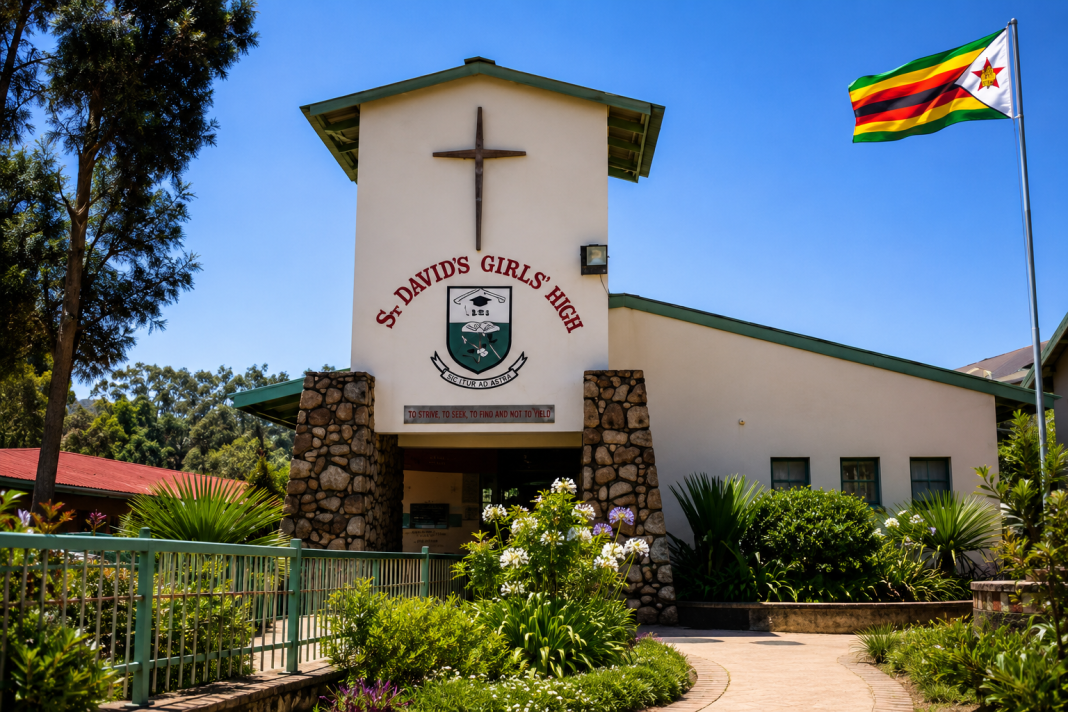
The St David’s High School Bonda abuse allegation has put school safety under scrutiny, raising fresh questions about teacher accountability, boarding school safeguards and child protection in Zimbabwe.
Security guards at the Nyanga school allegedly stopped a male teacher on June 25 as he returned a female pupil from his private residence after other pupils alerted school authorities.
The report was based on a statement from the Anglican Diocese of Manicaland.
The pupil later told school officials during a preliminary inquiry that the teacher had been sexually involved with her.
The school reported the case to police as statutory rape and abuse of authority.
The teacher allegedly fled.
The diocese said the pupil received medical care and trauma support.
It also said school authorities notified her parents and informed the Ministry of Primary and Secondary Education so it could begin suspension and deregistration procedures.
Those actions matter.
They suggest that pupils spoke up, security acted, school officials escalated the matter, and the church authority did not treat the allegation as a private disciplinary issue.
But the case still leaves a difficult question for Zimbabwe’s education system.
How did a teacher allegedly get access to a pupil in circumstances that allowed her to end up at his private residence?
Police must investigate the allegation fully.
The accused teacher also has the right to due process.
But due process does not require schools, parents or authorities to ignore the power imbalance between a teacher and a pupil.
A teacher controls marks, discipline, classroom access and, in many cases, a child’s sense of safety.
In a boarding school, that authority reaches beyond the classroom.
Pupils live away from home and depend on the institution for food, shelter, supervision and protection.
That is why the St David’s allegation requires more than public outrage.
It calls for a closer look at how schools prevent abuse, detect warning signs and respond when children report harm.
Law and practice
Zimbabwe’s legal framework places a clear duty on adults and institutions to protect children from abuse.
The Constitution defines a child as anyone below 18 and makes a child’s best interests paramount in every matter concerning children.
The Criminal Laws Amendment (Protection of Children and Young Persons) Act, 2024, strengthened protections for children under 18 in sexual offence cases.
The Children’s Amendment Act of 2023 also requires people who know, suspect or believe that a child has been abused, is being abused or is likely to be abused to report the matter to police or a child protection officer as soon as reasonably possible.
That means teachers, school authorities, health workers, religious leaders and other adults who work with children cannot treat suspected abuse as an internal matter only.
The challenge lies in enforcement.
A school can have a child protection policy and still fail a child at the gate, near a staff house, in a dormitory or after evening study.
A ministry can speak strongly about safeguarding and still need faster systems to track teachers accused or found guilty of misconduct.
A church-run school can preach morality and still need independent reporting channels that protect pupils from fear, shame and retaliation.
What the St David’s abuse allegation shows
The St David’s case also shows why pupil voice matters.
According to the report, pupils raised the alarm.
Security acted on the tip-off.
School authorities reported the case to police.
The diocese said the pupil received medical care and trauma support.
If confirmed, those steps show the value of a school culture that listens when children speak.
Many children do not report abuse because they fear punishment, disbelief, shame or retaliation.
Some adults also ask questions that shift blame from the alleged abuser to the child.
They ask why the child went there, why she delayed reporting or why she did not resist.
Such questions can silence children.
A strong safeguarding system starts from a different position.
It gives pupils safe adults, safe reporting channels and a clear response when they raise concerns.
The Global Working Group to End School-Related Gender-Based Violence says schools should establish safe, accessible and confidential reporting systems for victims and witnesses.
It also says those systems should connect children to support services and help hold perpetrators accountable.
Zimbabwean schools need that standard.
Every boarding school should have a trained safeguarding focal person, a direct reporting link to police Victim Friendly Units or child protection officers, anonymous reporting options, written response timelines and protection against retaliation.
An old warning
The St David’s allegation did not emerge in a vacuum.
Zimbabwe has faced concerns about teacher-perpetrated sexual abuse for decades.
A study published in Child Abuse & Neglect examined reported cases of teacher-perpetrated child sexual abuse in rural primary schools in Zimbabwe between 1990 and 1997.
The study described the problem as “not uncommon” in rural primary schools.
The study is old, and Zimbabwe’s laws have changed since then.
But it remains a warning.
Abuse can grow where adults control children, institutions protect reputations, reporting channels feel unsafe, and communities treat sexual abuse as a scandal to manage instead of a crime to report.
The African Charter on the Rights and Welfare of the Child also requires states to protect children from sexual exploitation and abuse.
That duty does not end when police open a docket.
It continues through medical care, psychosocial support, witness protection, school discipline, deregistration where appropriate and long-term monitoring of school environments.
Boarding school risks
The St David’s abuse allegation also highlights the special risks pupils face in boarding schools, where children live away from home.
Boarding schools require tighter safeguards because pupils live away from home.
They depend on adults for food, accommodation, supervision, discipline and emotional support.
That dependence gives teachers, matrons, boarding masters, administrators and other staff significant power.
Zimbabwe should require every boarding school to adopt clear rules that bar teachers from taking pupils to private residences.
Schools should record and verify pupil movement after hours.
They should restrict one-on-one contact in isolated spaces.
They should require written approval for any exceptional contact outside normal school activities.
The Ministry of Primary and Secondary Education, church authorities and independent school boards should also maintain a national barred list for teachers and school workers found guilty of sexual misconduct or formally deregistered after safeguarding breaches.
Schools should check that register before hiring any teacher or boarding staff member.
Safeguarding training should also become part of teacher registration and renewal.
Teachers need training on grooming, professional boundaries, disclosure handling, trauma-informed response and mandatory reporting.
Pupils need age-appropriate lessons on unsafe touch, coercion, grooming, online abuse and reporting channels.
Such measures would protect pupils while giving schools clearer rules for professional conduct.
Accountability test
The St David’s case will test more than one teacher.
It will test the school, the Anglican Diocese of Manicaland, the Ministry of Primary and Secondary Education, police, prosecutors and Zimbabwe’s wider child protection system.
Authorities must locate the accused teacher and bring him before the courts.
The school must protect the pupil from stigma.
The ministry must act transparently on disciplinary procedures.
The diocese must show that child safeguarding matters more than institutional image.
Police and prosecutors must handle the case with speed, care and professionalism.
The public must also avoid identifying, shaming or speculating about the pupil.
A child who reports abuse needs protection, not exposure.
Schools become safer when pupils can report abuse, adults respond quickly and institutions enforce clear rules.
They become safer when no teacher can move a pupil into a private space without detection.
They become safer when the law protects children in classrooms, dormitories, staff areas and school grounds.
The pupil at the centre of the St David’s case deserved that protection.
The St David’s abuse allegation should become a turning point for stronger school safeguarding, not another case that fades after public outrage.
Every child in every Zimbabwean school deserves the same.