
By Tendai Makaripe
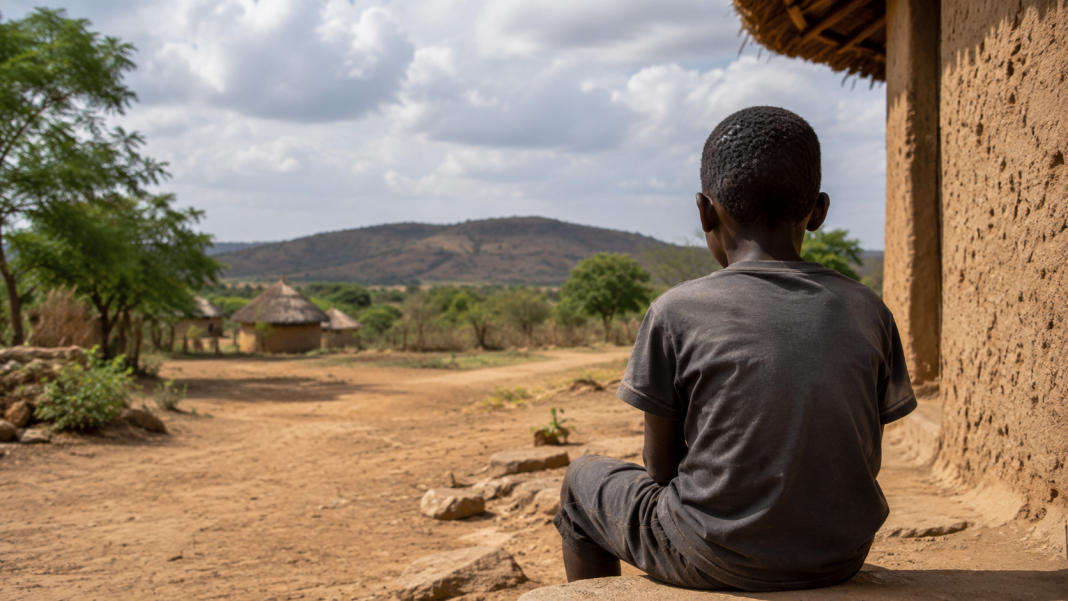
A 13-year-old Buhera boy born with a rare genital condition that left him with both male- and female-looking genital features is living with pain and school ridicule as his family appeals for specialist medical treatment.
The Children’s Voices is withholding the child’s name, school and exact village to protect his privacy.
His mother said he has one testicle, an underdeveloped male organ, a urinary opening that does not sit in the usual position and a female-looking genital feature that remains closed.
She said the closed area sometimes becomes so painful that the boy struggles to walk properly.
“I desperately need to have my baby fixed. If it means an operation, I really need help,” the mother said.
She said the boy struggled to pass urine for about a month as a baby before doctors gave him injections that helped him urinate.
The family later took him to one of the biggest public hospitals in the country for specialist attention.
His mother said hospital staff told them to wait for a call, but years have passed without further assistance.
“I recently went there again with the same issue, but they told me to wait for communication,” she said, almost in tears.
The Children’s Voices could not obtain a comment from the hospital.
His mother said some pupils discovered this rare genital condition and started insulting him.
“Some students now know of his situation and insult him as gay, something that makes him feel uncomfortable,” she said.
The boy said he wants treatment and dignity.
“I just want the pain to stop and to go to school without being laughed at,” he said.
A general practitioner who requested anonymity said children with such rare genital conditions need early specialist assessment.
“Specialists should assess children with such conditions as early as possible because delays can affect urination, physical comfort, psychological well-being and social development,” the doctor said.
Medical experts broadly describe such conditions as differences of sex development, or DSD, although only specialists can diagnose a child’s specific condition.
DSD refers to conditions in which genes, hormones, reproductive organs or genital anatomy develop differently from typical male or female patterns.
Health literature says DSDs vary widely and may require hormone checks, scans, psychological support and review by pediatric urologists and endocrinologists.
The Pediatric Endocrine Society estimates that one in every 4,000 babies has a DSD.
The boy’s parents are unemployed and say they cannot afford private specialist care.
They also struggle to pay his school fees.
The family is appealing for medical help, child protection support and assistance to keep him in school.