
By Tendai Makaripe
A child’s face is not a public noticeboard.
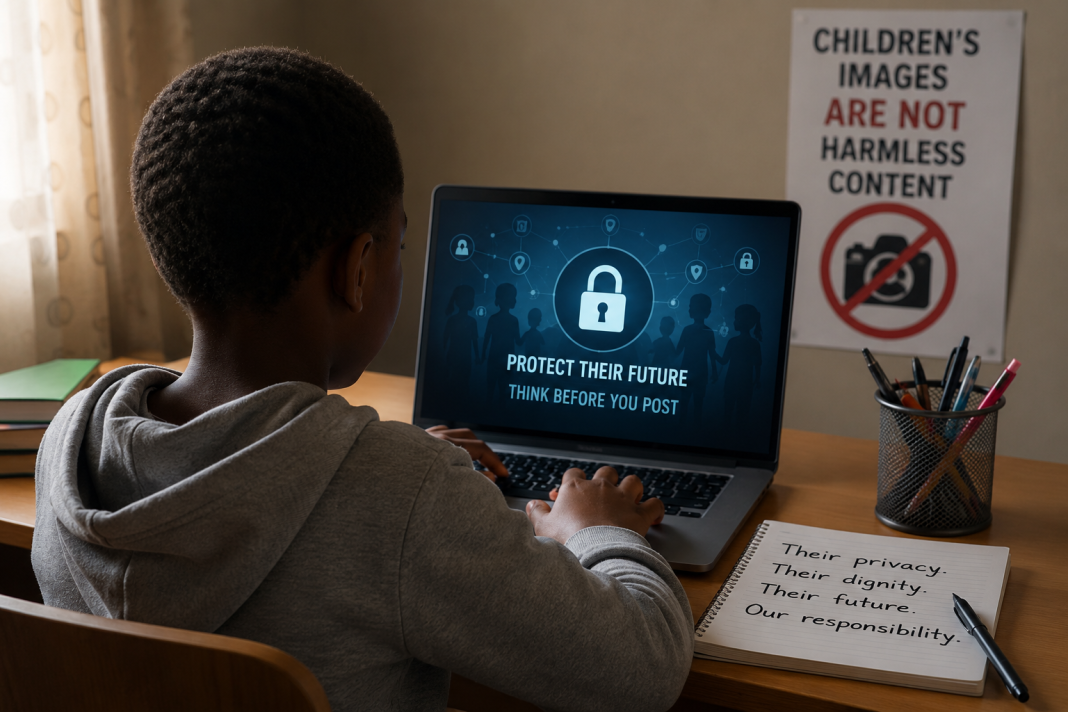
Children’s images online may appear harmless when adults post school prize-giving photos, church youth programme pictures, sports day celebrations, donation handovers, birthday messages or proud parent updates.
Yet in the age of artificial intelligence, every clear image of a child has become more than a memory.
It has become data.
Strangers can copy it. Criminals can store it. Artificial intelligence tools can scrape it.
Predators can manipulate it. Bullies can weaponise it.
Zimbabwe must therefore start treating children’s images as child protection material, not casual social media content.
AI has changed the risk
The warning signs have already appeared elsewhere.
In the United Kingdom, child safety experts recently urged schools to remove identifiable pupils’ photos from websites and social media pages after criminals reportedly used artificial intelligence to create sexualised images from ordinary school photos for blackmail.
Zimbabwe should not wait for its own scandal before acting.
Across the country, schools post pupils in uniforms after speech and prize-giving days.
Churches post youth groups in full uniform.
Politicians pose with children during donation ceremonies.
Community organisations share images of vulnerable children to attract sympathy.
Parents proudly post birthdays, exam results and school achievements.
Media houses sometimes publish children’s faces to make stories more emotional.
Many adults act from good intentions.
They want to celebrate children, raise awareness or show accountability.
However, good intentions do not remove digital risk.
A post that celebrates a child today may expose that child tomorrow.
This is also about dignity
The danger goes beyond pornography, blackmail or deepfakes, although those threats remain serious.
This issue also speaks to dignity, privacy and power.
Many children do not choose the digital identities adults create for them.
A child may grow up and discover that the internet already knows their poverty story, disability, school, village, family background, church, sporting history or childhood trauma.
Adults may call that awareness.
The child may later experience it as exposure.
This matters deeply in Zimbabwe, where communities often use children’s images to tell stories of need.
A family seeking help may allow photographs because assistance appears tied to visibility.
A pupil may smile for a school photo because a teacher controls the moment.
A child in a church uniform may appear online because adults see the post as innocent.
Power shapes consent.
Consent alone is not enough
Zimbabwe already has a rights-based foundation for stronger protection.
Section 81 of the Constitution places the best interests of the child at the centre of every matter concerning children.
The UN Convention on the Rights of the Child also protects children’s privacy, honour and reputation.
These rights must follow children into the digital world.
The government’s work on an Online Child Protection Policy, therefore, comes at an important time.
Zimbabwe’s data protection principles also require adults and institutions to treat children’s personal information with care.
Still, consent alone cannot solve this problem.
Can a parent truly give informed consent if no one explains AI scraping, facial recognition, deepfakes, digital permanence or online grooming?
Can a poor family freely refuse a photograph when help seems connected to public exposure?
Can a child say no when a teacher, pastor, coach, journalist or official points a camera?
These questions should trouble every school, church, newsroom and organisation that works with children.
Zimbabwe needs child-image policies
Schools should stop posting full names together with clear faces.
They should avoid sharing children’s locations in real time.
Churches and clubs should ask for specific consent for specific uses, not broad permission that covers every future post.
Charities should stop displaying children’s suffering as marketing material.
Media houses should protect survivors, vulnerable children and children in distress.
Parents should start asking older children whether they want their images online.
This does not mean society must erase children from public life.
Children deserve recognition.
Talented pupils deserve celebration. Young writers, athletes, innovators and leaders deserve platforms.
But adults must protect children while giving them visibility.
Children’s Voices exists because children must take their rightful place in national conversations.
However, visibility must never become vulnerability.
Before posting a child’s image, every adult should ask one hard question: will this child still feel safe, respected and proud of this post in 10 years?
A child should not spend adulthood escaping a digital identity that adults created for them