

By Tendai Makaripe
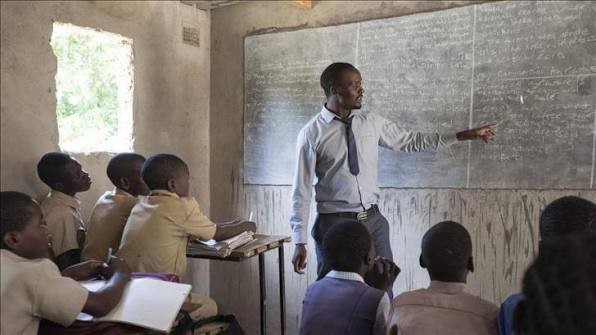
HARARE — Primary and Secondary Education Minister Torerai Moyo denied Wednesday that Zimbabwe faces a teacher shortage despite lawmakers citing unfilled posts and staffing gaps in rural schools.
Moyo told the National Assembly that recent recruitment had reduced the national teacher-to-pupil ratio to 1 teacher per 35 to 40 pupils.
“We do not have a shortage of teachers in Zimbabwe,” Moyo said.
However, Moyo acknowledged that qualified teachers who graduated between 2019 and 2022 remain unemployed.
His remarks highlighted the difference between having trained teachers available and employing enough of them in classrooms.
Lawmaker Lynette Karenyi challenged the minister’s position.
She said Zimbabwe Teachers’ Association representatives told lawmakers during a workshop Tuesday that schools still lacked teachers because the government had stopped filling some positions.
“Government froze those posts,” Karenyi said, recounting the union’s position.
Karenyi asked whether the restrictions could leave classes unattended when teachers take maternity or other forms of leave.
Moyo said the ministry assigns relief teachers when permanent teachers take extended leave.
However, he did not disclose how many relief teachers the ministry had available or whether every affected school received replacements.
Teacher shortage claim meets hiring backlog
The Minister said the government recruits teachers based on when they completed their training.
Under that system, authorities must employ graduates from earlier years before considering those who qualified in 2025 and 2026.
The policy generally prevents recent graduates from securing posts while candidates who qualified as far back as 2019 remain in the recruitment queue.
However, the government makes exceptions for teachers trained in subjects where shortages persist.
Moyo’s denial contrasted with an acknowledgement by Public Service, Labour and Social Welfare Minister Edgar Moyo during a parliamentary session in May.
Edgar Moyo said the government wanted to staff every school adequately but knew that “there are many vacant posts that have not been filled.”
He said the Treasury had funded the recruitment of about 2,000 additional teachers in 2026, an allocation he acknowledged “may not be enough.”
Moyo nevertheless said the government had improved staffing levels across the country.
“The teacher-pupil ratio is now quite admirable,” he said.
The education minister did not provide the number of teachers recently recruited, the total number of vacant posts or a provincial breakdown supporting the national ratio.
Lawmakers flag rural staffing gaps
Member of Parliament for Mount Darwin West constituency Witness Jonga said some rural schools still lacked qualified math and science teachers, limiting pupils’ access to key subjects.
However, Moyo said the government “immediately recruits teachers trained in physics, chemistry, biology and other science, technology, engineering and mathematics subjects when vacancies exist.”
His response acknowledged shortages in some subjects even as he rejected claims of a nationwide teacher shortage.
The policy allows some recent science graduates to secure posts while thousands of other qualified teachers remain in the recruitment queue.
The parliamentary exchange ended without a current national vacancy total, a district-by-district staffing breakdown or a timetable for employing teachers who have waited since 2019.