

By Tendai Makaripe
KARIBA, Zimbabwe — A Form 1 student who lost her mother in the Kariba ferry disaster fears she and her Grade 5 sibling may struggle to remain in school as government agencies work out child-focused support under the Kariba ferry relief package.
“I lost my mother in the accident. She had gone to Gache-Gache to buy fish for resale here in Kariba,” the girl said on condition of anonymity. “She was a single parent who took care of us. Life has never been the same since she died. I hope I will be able to continue with my education.”
Children’s Voices withheld her name because she is a minor dealing with the recent death of her mother.
The girl said her mother was skilled at buying fish from communities around Lake Kariba and reselling it in Kariba town.
The small business supported the family and paid school fees for the two children.
Now, that source of income is gone.
“Many students lost parents in this accident,” she said. “I have friends and schoolmates who are in the same situation as mine. We need help.”
Her experience highlights a wider child-protection challenge emerging from the Aug. 11 disaster.
Beyond restoring transport links, some affected children now face questions about who will support them, keep them in school and help them cope with the sudden loss of parents or caregivers.
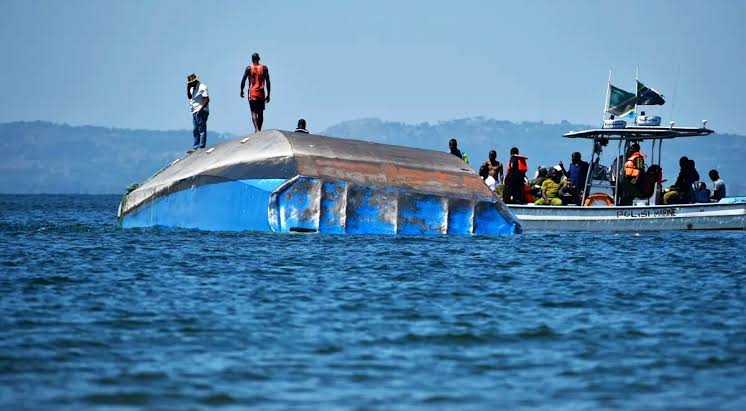
The Rural Infrastructure Development Agency-operated Mbuya Nehanda ferry capsized near Long Island on Lake Kariba while travelling from Kariba toward Chalala.
The disaster killed 97 people, including at least 39 children.
Cabinet approved the Kariba ferry relief package on Sept. 8, with measures covering humanitarian assistance, psychosocial support, child protection, education and infrastructure.
The government also said it plans to improve transport services for communities that depend on Lake Kariba.
However, the Ministry of Primary and Secondary Education says officials are still working out specific education measures through an inter-ministerial process.
Ministry Director of Communications and Advocacy Taungana Ndoro said the ministry was focusing on learning continuity, learner safety and psychosocial support as part of the wider government response.
“On the specific questions you have raised — including schooling disruption, transport arrangements, and what the package means for children and learners — these matters are still being coordinated through the appropriate inter-ministerial structures,” Ndoro said.
He said the ministry could not yet provide figures, timelines or specific commitments while the responsible agencies complete their work.
“What I can say is that the Ministry’s priority remains ensuring that affected learners are not left behind and that learning continues in a safe and supportive environment,” Ndoro said.
He said provincial and district education officials were working with partners to assess needs and determine what support affected learners require.
Ndoro referred questions about ferry operations, relief distribution and recovery logistics to the Ministry of Transport and Infrastructural Development, the Department of Civil Protection and the Ministry of Public Service, Labour and Social Welfare.
Meanwhile, Mashonaland West proportional representation MP Mutsa Murombedzi said children who lost parents in the disaster need more than restored transport.
“Government and child-protection agencies should ensure that children who lost caregivers have safe care arrangements and that relatives who take them in receive adequate support,” she said.
Murombedzi also called for bursaries, school fee waivers, uniforms and books to help affected children remain in school.
She added that sudden parental loss can also leave children struggling with grief and trauma, making access to trained counsellors, social workers and community child-protection officers critical.
“While transport and schooling remain urgent for all affected children, those who have lost parents require a layered response: immediate care and guardianship, educational support, psychosocial counselling, and long-term social protection,” Murombedzi said.
She added that the government should also prioritise affected children in social protection programmes, including food assistance and cash transfers, to prevent the disaster from pushing them deeper into poverty.
“In the immediate term, food, emergency learning support, and psychosocial care are the three pillars that will make the most tangible difference,” Murombedzi said.
In the longer term, she said government should strengthen rural transport infrastructure and disaster preparedness to reduce the impact of future emergencies on children.
For the Form 1 student and her younger sibling, however, the crisis is already personal.
Their mother’s fish trade once provided their food and school fees. Now the girl is waiting to find out what support will replace the security they lost with her.
“We need help,” she said.