

By Tendai Makaripe
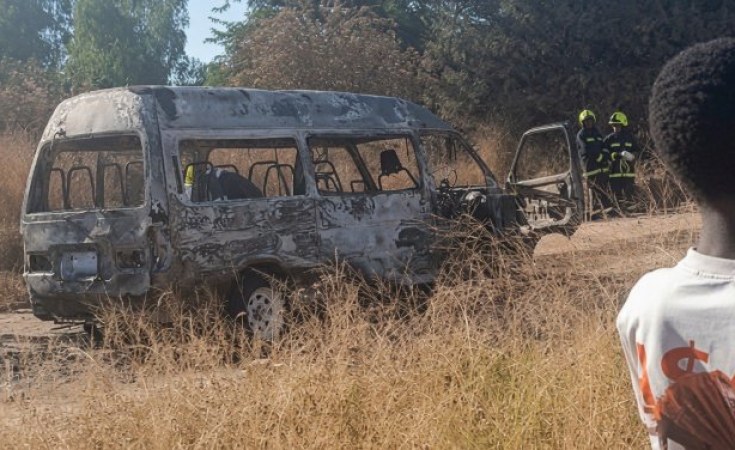
School transport has become a child protection emergency after the deaths of seven schoolchildren in a Gweru kombi fire exposed dangerous gaps in how Zimbabwe monitors vehicles that carry learners.
Seven children left school expecting to go home.
Their bags, uniforms, homework, hunger, laughter and ordinary tiredness should have ended in the safety of family homes.
Instead, the vehicle meant to take them home became the place where their lives ended.
Zimbabwe must not treat this tragedy as another road accident.
Police can arrest suspects, courts can hear evidence, and families can bury their children, but the country must still answer one painful question: who protects children between the school gate and the home?
That question matters because school transport sits in a dangerous blind spot.
Parents often arrange transport privately, schools often distance themselves from those arrangements, operators focus on daily income, and authorities usually intervene after a disaster has already struck.
Such a system leaves children at the mercy of chance.
Police say preliminary investigations linked the Gweru fire to a container of petrol allegedly carried inside the kombi.
If investigators prove that claim, the country must call it what it is: reckless disregard for children’s lives.
A vehicle full of schoolchildren should never carry petrol, gas cylinders or any dangerous substance in the passenger space.
Children are not cargo.
A learner is not a fare to be squeezed into a vehicle before sunset.
Every child who climbs into school transport places trust in adults who have a duty to protect them.
Yet across Zimbabwe, many pupils use private kombis, unmarked cars and informal transport operators because their parents have no better option.
Work starts early, schools sit far from homes, fuel costs remain high, public transport fails many routes, and formal school buses remain beyond the reach of many families.
Parents do not choose risk because they do not care.
Many choose what they can afford, then pray that the driver arrives safely.
But prayer cannot replace policy.
Zimbabwe cannot protect children through hope, luck and WhatsApp arrangements.
The Constitution says a child’s best interests matter most in every issue that concerns a child, and that principle must follow the child onto the road.
The Gweru case demands justice for the dead children and support for the survivors, but justice must go beyond the two accused people.
The wider system must also face scrutiny.
Did anyone check the vehicle before it carried pupils?
Which authority verified the driver and conductor?
What office confirmed the vehicle’s fitness, insurance and licence?
How did the system make sure the kombi did not overload children?
Where were parents supposed to get reliable information about the standards they should demand?
Why do many schools keep no clear records of vehicles that collect pupils every day?
If the answer points to nobody, then Zimbabwe has hidden a child protection failure inside ordinary school transport.
Other countries offer useful lessons, not perfect models.
South Africa’s Western Cape tells learner transport operators to use roadworthy and licensed vehicles, hold valid operating licences, display licence details and school names, keep first-aid kits, avoid overloading and load children only at safe places.
The province also urges parents to check operating licences, drivers’ licences, professional driving permits, vehicle licence discs and overloading.
The United States goes even further by treating vehicles sold to carry 11 or more students as school buses that must meet federal safety standards above ordinary passenger vehicles.
Zimbabwe may not afford that model, and no serious policymaker should pretend every school can suddenly buy a specialised bus.
But Zimbabwe can afford basic rules.
Every vehicle carrying schoolchildren should have a valid operator’s licence, a current fitness certificate and insurance.
Drivers who transport learners should hold valid licences, police clearance and basic child-safety training.
Authorities should ban overloading in any vehicle that carries pupils.
Operators must never carry schoolchildren with fuel containers or other dangerous substances inside.
Each regular school transport vehicle should carry a fire extinguisher and first-aid kit, use working doors and follow a known route.
Schools should keep registers of vehicles that regularly carry their pupils.
Those registers should show the driver’s name, vehicle registration number, route, emergency contact, operator’s licence, insurance and fitness certificate.
Parents, police, education officials and road safety authorities should inspect that information when concerns arise.
This system would not end every crash, but it would create accountability before tragedy strikes.
Government must also avoid punishing poverty in the name of reform.
If authorities impose rules without support, transport costs will rise, and poor children will suffer first.
Schools, councils, parents, police and transport authorities should therefore create affordable registered learner transport schemes, safe pickup points and routine inspections around schools.
The goal should not punish parents or small operators.
Its purpose should protect children.
The seven children who died in Gweru cannot come back.
Zimbabwe can still honour them by refusing to let their deaths become another passing headline.
The Gweru kombi fire must mark the moment the country declares school transport safety a child protection issue.
Not after another funeral.
Now.