

By Staff Reporter
A children-led traditional dance performance stood out at Zimbabwe’s 2026 Independence Day celebrations in Maphisa.
The showcase drew attention to the role of children in preserving culture and expressing national unity before President Emmerson Mnangagwa.
The performance came shortly after the presidential salute at the new Maphisa Culture Centre. Children from across Zimbabwe had gathered there for the national children’s party.
Chirozva High School leads the showcase
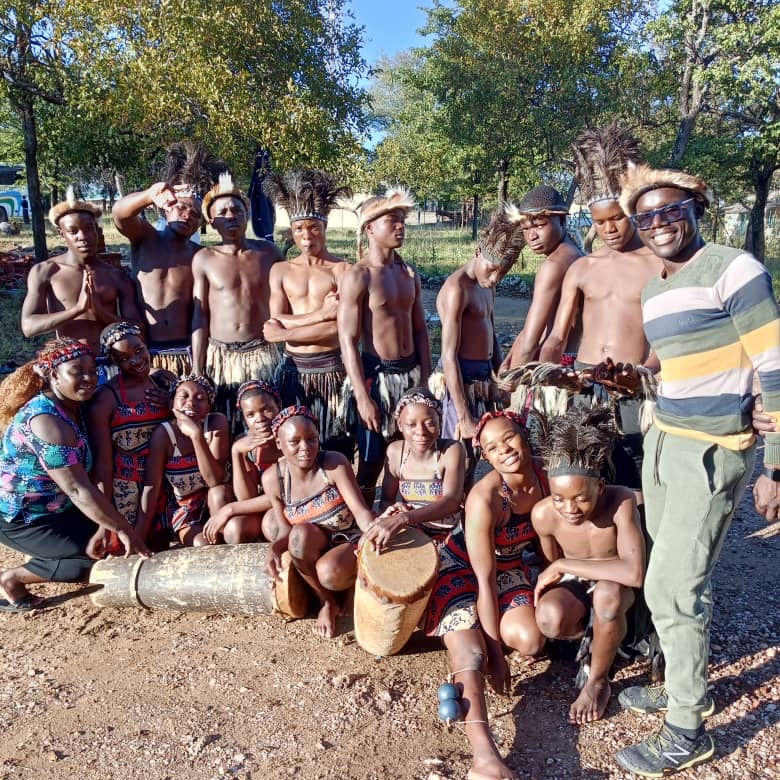
Chirozva High School of Buhera, Manicaland, led the performance. The group presented a choreographed Jaka traditional dance based on this year’s theme, “Unity and Development Towards Vision 2030.”
First, the dancers entered the arena in a tight spiral formation.
The movement echoed the stone walls of Great Zimbabwe.
As a result, the routine immediately signalled heritage and national identity.
The girls opened with controlled steps. They sang Urombo Huchapera as they gently moved their shoulders to the beat of the drums.
Then the tempo rose. The girls lifted their knees high and turned in unison.
In turn, the amagavhu on their legs rattled across the arena.
Dance carries a message of unity and hard work
After that, the boys took over. They used forceful foot-stomping drawn from liberation-era celebration dances.
They moved toward the presidential dais. Then they dropped onto their backs in unison in one of the routine’s most dramatic moments.
Coach and mentor Mr G. Gopo said the choreography carried a message about patriotism, discipline and hard work.
“Our lines opened and closed like a kraal gate, symbolising the protection of the nation,” Gopo said.
He said the song and dance called on Zimbabweans to work hard and do everything with excellence so that poverty could end.
Children shape the national event
The performance relied on raw chant, drum and footwork rather than electronic effects. Because of this, it drew a loud response from the crowd.
Deputy Minister of Sports, Recreation, Arts and Culture Emily Jesaya said the Maphisa Culture Centre was meant to serve as “a permanent engine for cultural and economic development.”
For many young people at the celebration, the message came through clearly. Children not only attend the ceremony. Instead, they helped shape it.
They used dance, song and discipline to show that children can carry Zimbabwe’s culture, tell its story and take part in national life.