

By Ruvimbo Jane Matibiri
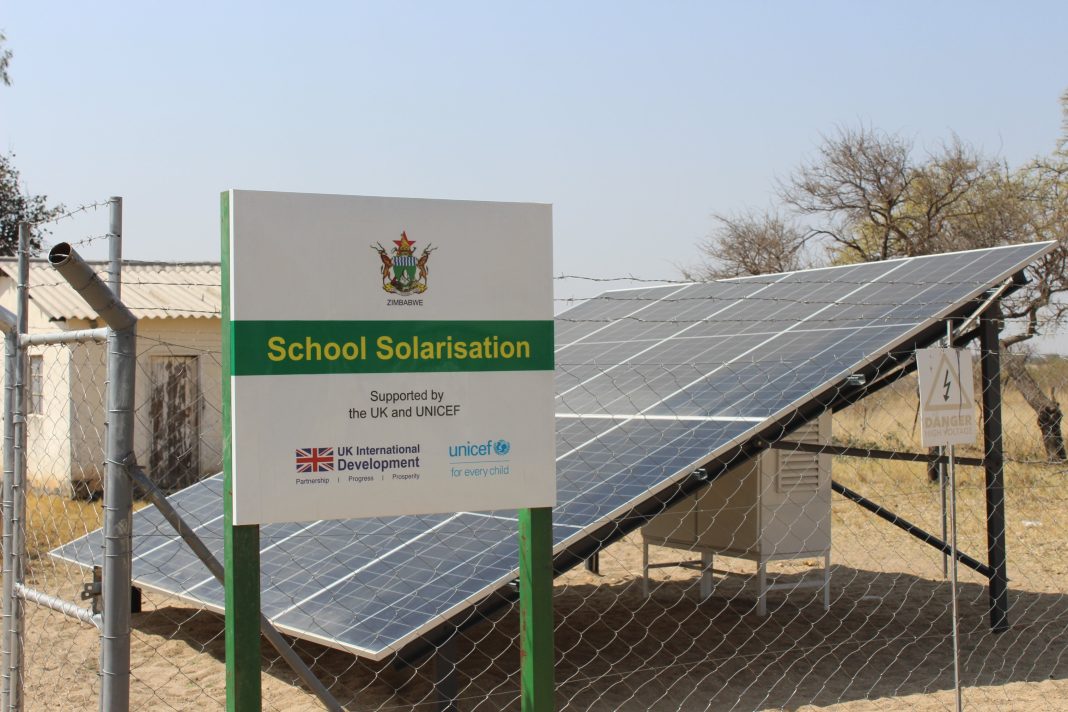
HARARE, Zimbabwe — Bantwana Zimbabwe, UNICEF and the U.K. government are installing solar power at rural schools to run computers and Wi-Fi under the TEACH project, expanding digital learning and keeping children in class.
The Teacher Effectiveness and Equitable Access for All Children (TEACH) project is a government-led, UNICEF- and U.K.-supported program that improves classroom teaching through coaching, mentoring and teacher learning communities.
It also removes access barriers by solarising schools and bundling connectivity, devices and training so rural and disadvantaged learners can benefit from reliable, tech-enabled education.
Bantwana praised the push on X (formerly Twitter), saying the TEACH partnership is “powering learning while boosting teacher effectiveness,” and that communities are launching income projects “to keep children in class.”
The organisation credited support from UNICEF Zimbabwe and the U.K. Embassy in Harare.
UNICEF says the TEACH program’s school “solarisation” pairs clean energy with connectivity and ICT labs so lessons continue even when the grid fails.
“Lack of electricity or alternative power affects thousands of learners in rural and remote areas of the country, widening the inequality gap between them and those in urban areas,” UNICEF said in a statement.
“Without electricity, there is no connectivity to the digital world. Access to learning material is reduced, and introducing ICT into the classroom remains a faraway dream.”
Typical installations include a 6.5kVA solar system with 10kW lithium storage, power to teachers’ houses, and computer labs with up to 40 charging points for devices.
The Ministry of Primary and Secondary Education leads implementation with UNICEF support.
The U.K. government jump-started the rollout with a US$2 million grant, part of a wider effort to improve quality and equity in rural education.
Officials framed the investment as a practical step toward inclusive learning, with solar allowing schools to print exam materials, run computer classes and keep essential admin online.
By 2024–2025, UNICEF and partners reported solar systems at roughly 150–154 schools, with expansion planned.
Giga, the UNICEF-ITU initiative supporting connectivity, says partners are bundling energy, internet and devices into complete school packages to avoid piecemeal upgrades.
Its “Adopt a School” model outlines a one-stop investment that covers a higher-capacity solar array, laptops or tablets, connectivity and teacher training.
Teachers say the changes are visible beyond the classroom.
Case studies from Nyanga and Mutoko describe staff staying at posts once considered hard to service, citing reliable power for lesson prep and evening marking.
At Mambwere Primary School in Manicaland and Dzvairo Primary School, solarisation is powering learning, while Westlea Primary School in Harare is using the Learning Passport platform in daily lessons.
UNICEF frames solarisation as both an education and climate-resilience measure in a country where many communities lack dependable electricity.
The solarisation and digitalisation of schools in Zimbabwe align with the global Re-Imagine Education Agenda, adopted at the Transforming Education Summit in New York at the end of 2022.
The Summit resulted in a call for all nations to support foundational learning as a key element in transforming education; promote green education by making climate change education an integral part of learning; prioritise digital learning for all children; encourage gender equity in education; and increase investment in education.